Explore the Updates to Cascade’s Energy Strategy
With the energy strategy, users can evaluate the emissions reduction potential of different energy carriers for aviation such as Sustainable Aviation Fuel (SAF), hydrogen, and electricity.
Why it Matters:
Understanding the amount of SAF, renewable hydrogen, and renewable electricity needed to decarbonize aviation is essential to scale production and determine whether this progress is feasible.
What’s New:
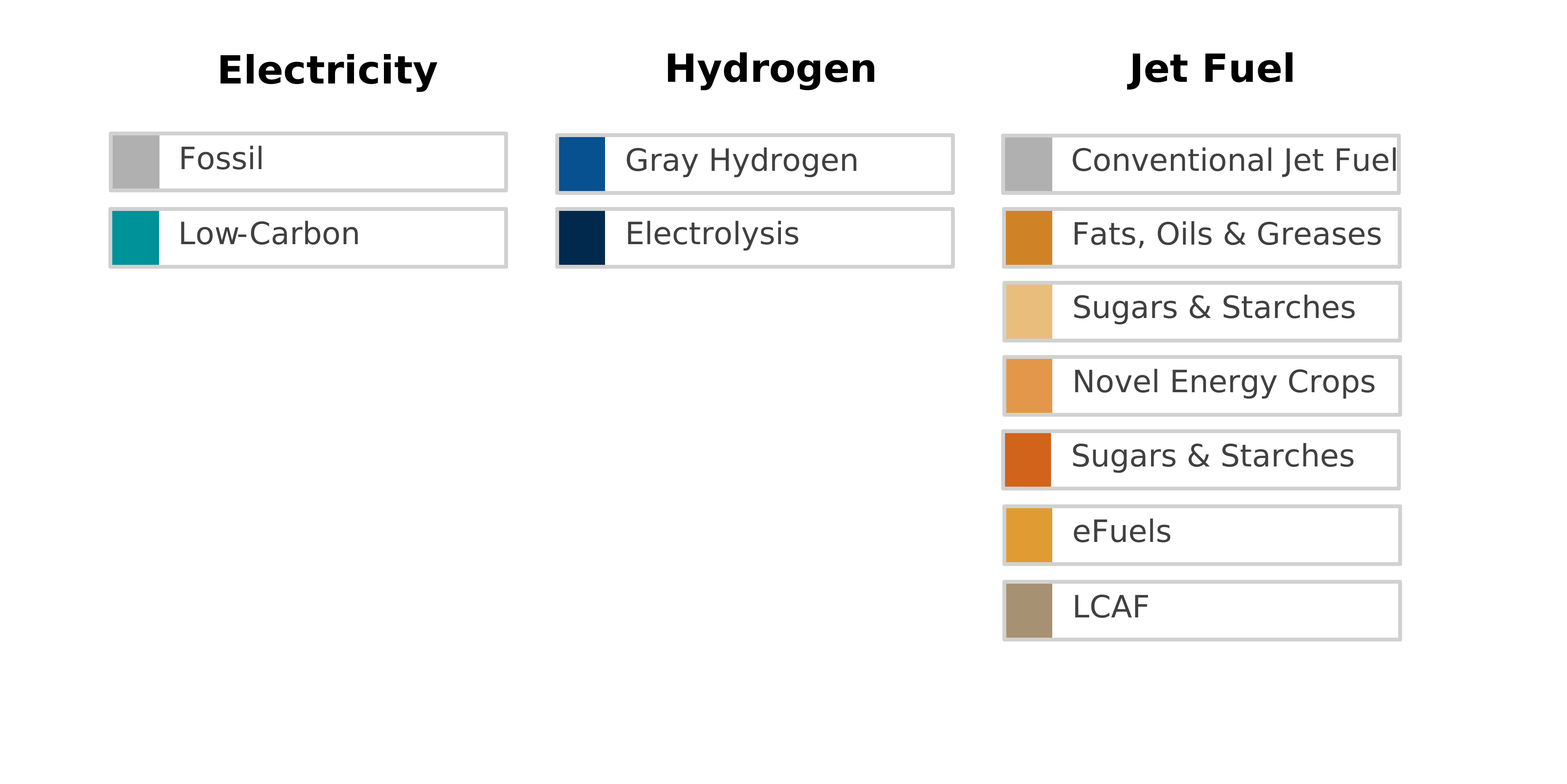
SAF can be made from biological sources (fats, oils & greases, sugars & starches, novel energy crops, or waste & residues) or from electricity and hydrogen (eFuels). The carbon intensity of eFuels depends on the sources of electricity and hydrogen used. Carbon intensity is the amount of carbon dioxide emissions released per unit of energy.
Within Cascade, hydrogen can either be produced from natural gas, which is called gray hydrogen, or from water and electricity using electrolysis. The carbon intensity of hydrogen made via electrolysis depends on the source of electricity used.
The composition and carbon intensity of SAF, hydrogen, and electricity from the following sources are now fully customizable:
Source: Boeing Cascade Climate Impact Model (Version 2.5)
Zoom in:
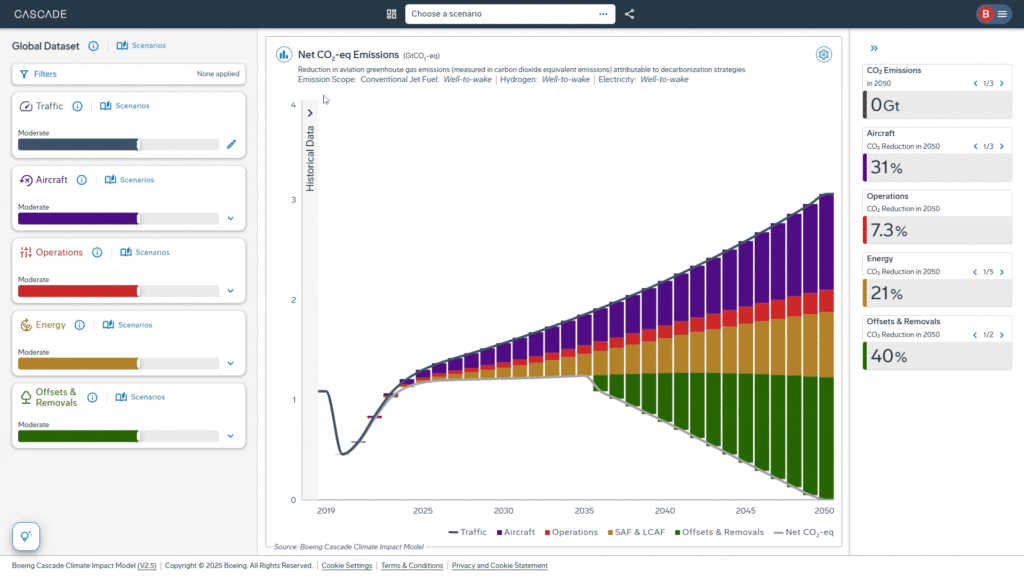
In addition to viewing the overall impact on emissions, you can perform analysis with charts available and test scenarios with differing quantities of SAF, electricity, and hydrogen required. These plots can be accessed from the chart icon in the upper left corner of the plot area.
How to Access our Selection of New Charts
Source: Boeing Cascade Climate Impact Model (Version 2.5)
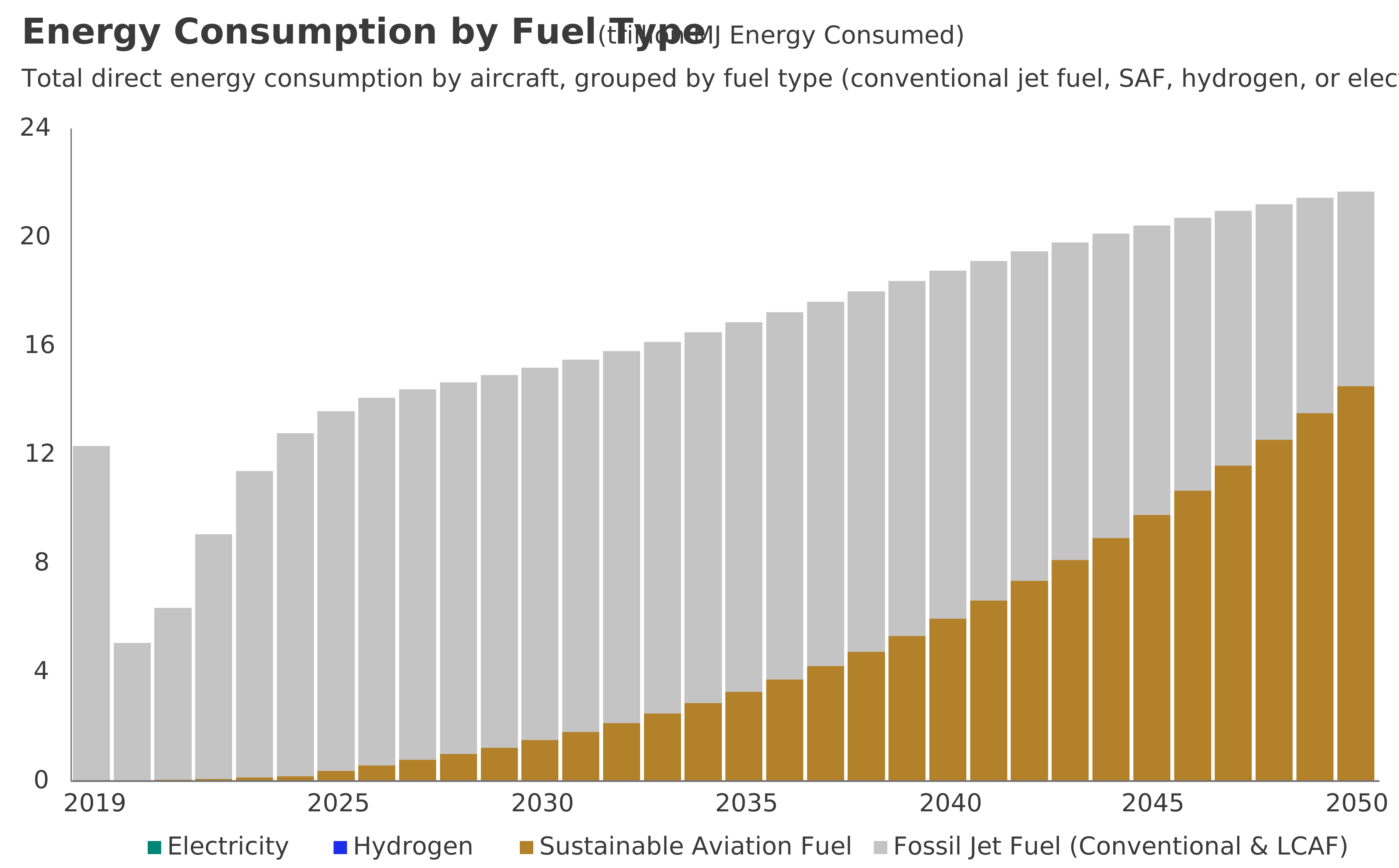
For example, the total energy consumed directly by aircraft can be seen in the Energy Consumption by Fuel Type chart. In the scenario shown here, two thirds of the total energy used by aircraft comes from SAF by 2050.
Source: Boeing Cascade Climate Impact Model (Version 2.5)
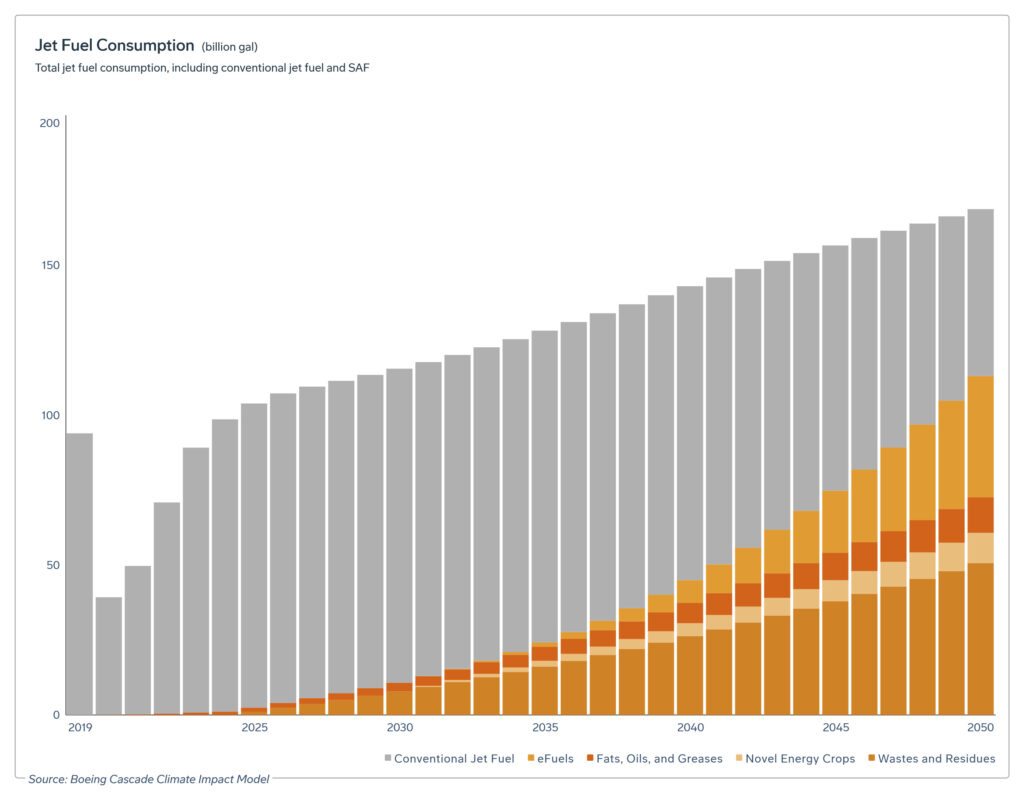
Specifics for each energy type can be assessed further, such as how much SAF from each feedstock type is required based the assumptions made. By 2050, 113 billion gallons (428 billion liters) of SAF are required in this scenario.
Source: Boeing Cascade Climate Impact Model (Version 2.5)
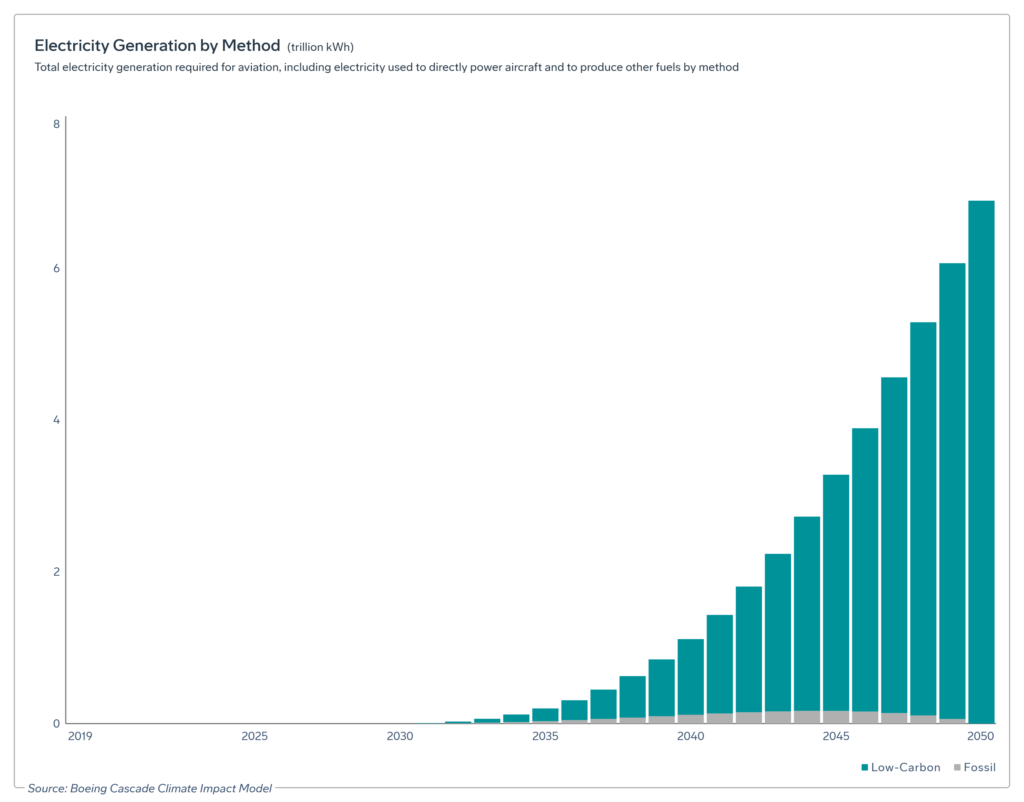
It’s also possible to see how much electricity is required to produce the eFuels shown in the previous chart. Here, 6.89 trillion kWh (6,890 TWh) of renewable electricity is required in 2050. This is equal to 82% of the total renewable energy that was produced globally in 2023, according to the International Energy Agency.
Source: Boeing Cascade Climate Impact Model (Version 2.5)
Try It Out:
With Cascade, the user can start from this scenario to understand the amount of biomass and electricity that might be needed in the future.