It takes coordinated technical work to do ambitious things like reducing aviation’s carbon footprint.
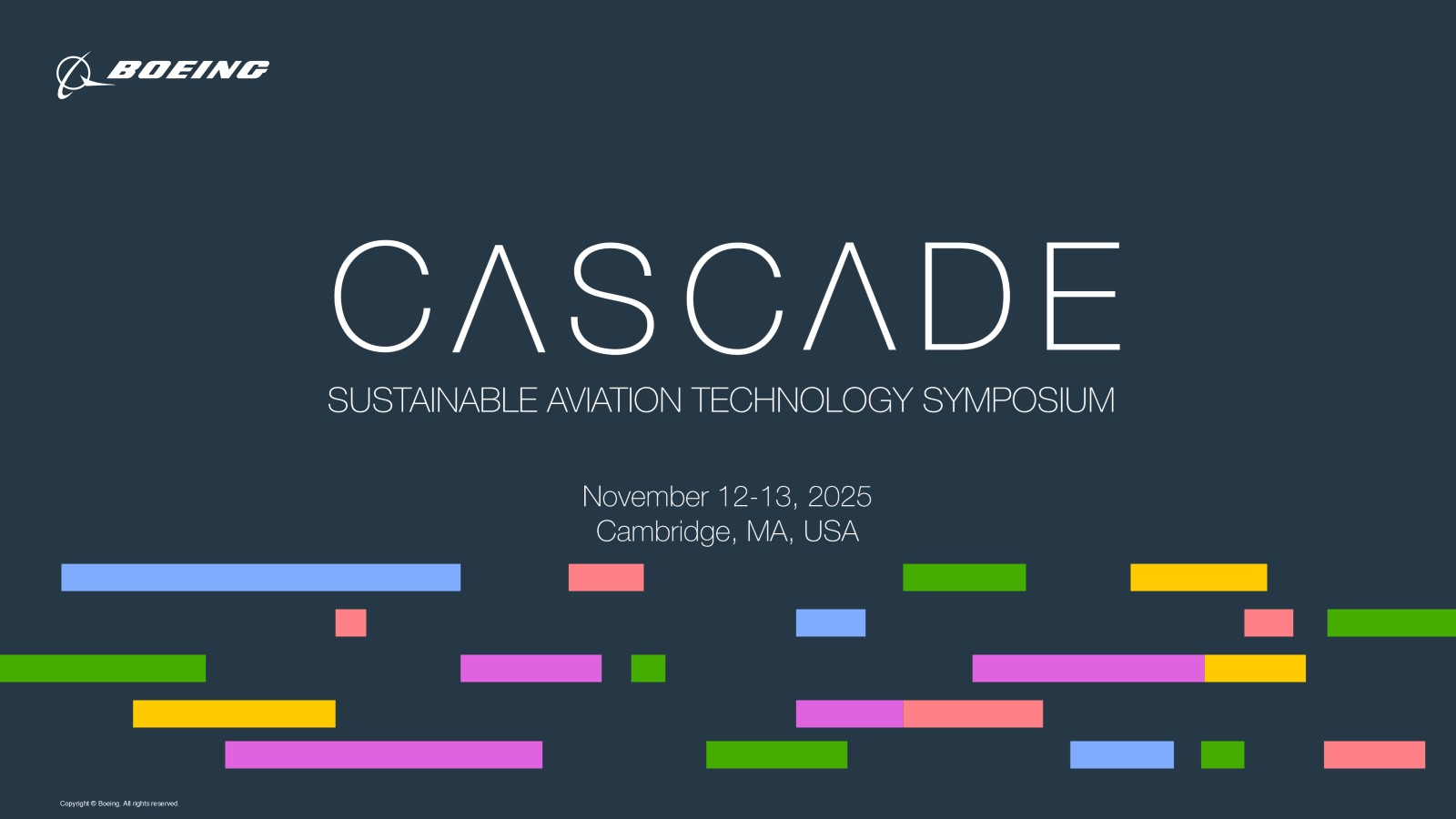
In late 2025, the inaugural Cascade Sustainable Aviation Technology Symposium (CSATS), hosted by Boeing Technology Innovation in Cambridge at the Samberg Conference Center on the campus of the Massachusetts Institute of Technology (MIT), brought together 100 experts from four continents to do precisely that.
The event convened leaders from academia, government, industry, airlines, airports, universities and the energy sector to focus on practical, implementable solutions.
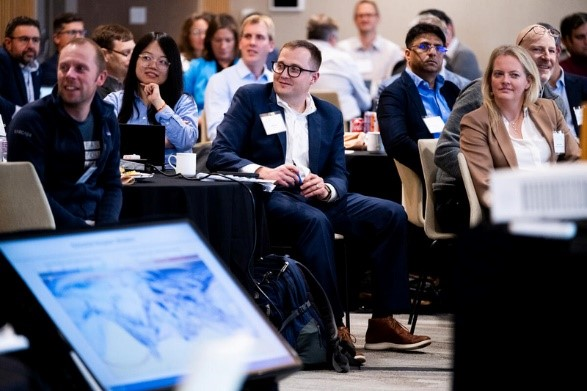
Symposium participants engaged in breakout working sessions on topics including a demo of the Boeing Cascade Climate Impact Model. (Photo © Boeing)
Participants addressed the high costs and low availability of sustainable aviation fuels (SAFs), the opportunities to improve fuel efficiency, and reduce the impacts of contrails. Conversations ranged from near-term operational improvements to longer-term shifts in energy supply and aircraft systems. The symposium was designed around four technical tracks to ensure discussions covered the whole pathway from energy source to aircraft operation:
- Low carbon energy: : Determine the amount of low net-carbon biomass and electricity available for aviation – both in the near and longer terms.
- Energy carriers and infrastructure: Determine the relative effectiveness of different energy carriers to use low net-carbon biomass and electricity to power aviation – both in the near and longer terms.
- Safety and certification pathways of new energy carriers: Identify the issues from a safety and certification perspective that must be overcome to use different energy carriers – both in the near and longer terms.
- Operations for fuel efficiency and contrail impact mitigation: Assess the potential for operations to improve fuel efficiency and reduce the impacts of persistent contrails.
The outputs from the four tracks were compiled into a proceedings document, which captures key challenges and recommended paths forward to overcome these challenges.
“From the beginning, we wanted CSATS to make a real difference,” said Todd Citron, Boeing Chief Technology Officer. “We had two goals: to bring representatives from across the aviation value stream together in focused working sessions, and to dive into the details to produce tangible recommendations that drive change.”
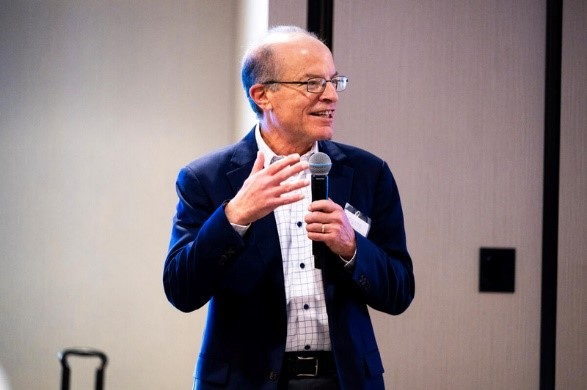
Boeing brought together industry, government, and academia around the world to discuss reducing aviation carbon emissions. (Photo © Boeing)
“The symposium enabled tangible steps to address aviation emissions,” said Jim Hileman, vice president and chief engineer, Sustainability. “We are excited to work with the network of experts assembled at the symposium to drive progress. Follow-up dialogues are being scheduled.”
Organizers plan to sustain momentum by supporting ongoing discussions among the working groups and sharing the symposium’s technical findings with broader stakeholder communities. The goal is to move from discussion to demonstrations that could lower the costs of reducing emissions while maintaining or improving safety.
Go deeper: Watch highlights from the symposium. (Video © Boeing)
Discover more: To learn more about the findings from CSATS, see the proceedings output per theme.