For the first time in its history, the aviation sector has a means for buying and trading carbon offsets to meet emissions targets via a framework known as CORSIA.
The impact:
130 states are committed to CORSIA’s target of limiting international emissions to 85% of 2019 levels.
The takeaway:
When used to complement and compound other decarbonization strategies, CORSIA could help
cut annual emissions in 2035 by more than 400 million tonnes.
CORSIA creates an aviation offsets market.
In 2019, governments around the world began their commitment to the Carbon Offsetting and Reduction Scheme for International Aviation, known as CORSIA for short.
Through CORSIA, countries aim to keep net emissions from their international air traffic at or below 85% of 2019 levels, and hold that course until 2035.
To make this target possible, the scheme introduced the sector’s first ever global market for purchasing and trading emissions offsets.
So how does it work?
CORSIA covers direct emissions from international flights.
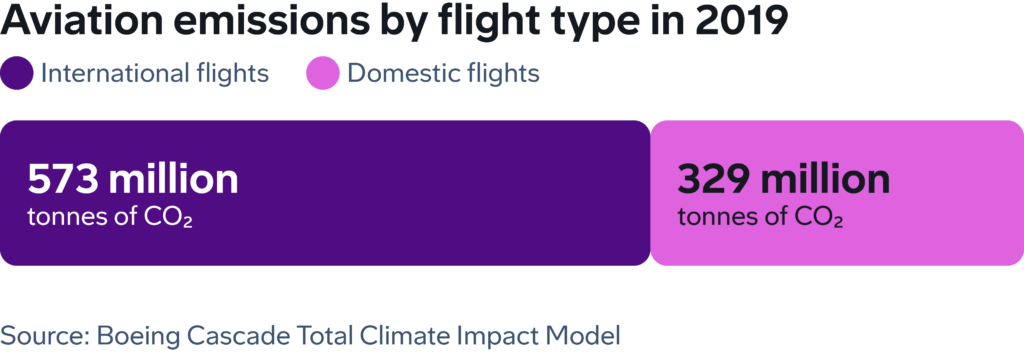
Almost two-thirds of aviation’s total emissions come from international journeys, so the scheme is well placed to target a large proportion of sector emissions.